Posted in #Medicareadvantage, #unitedhealthcare, Training, Updates

Dialysis Billing Update: UHC Medicare Advantage

If you have patients with UHC Medicare Advantage Plan? Then this blog post is for you.

Starting October 1st 2021 UHC Medicare Advantage Plan updated their billing information in order to avoid Denials.

Modifiers: UHC Medicare Advantage Plan requests that providers bill the dialysis treatment with the following modifiers: CG or KX for dialysis treatment

Revenue Codes: 821 and 881

CPT code: 90999

Coverage: Dialysis treatments that exceed 14 treatments in a calendar month will be reviewed per CMS Frequency of Hemodialysis (A55703) LCD

If you would like to read the whole CMS Frequency of Hemodialysis (A55703) LCD please click here.


Find this type of content useful? Then follow my blog for more useful medical billing, medical coding and reimbursement/medical policies updates and tips.


Recent POSTS:

Posted in HEDIS Measures, Training, Updates

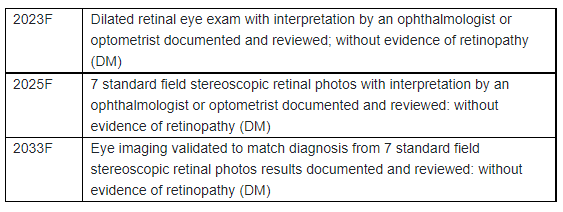
Proper coding for Comprehensive Diabetes Care HEDIS Measure: retinal eye exams (DRE)

Definition:  Comprehensive Diabetes Care HEDIS® Measure Retinal Eye Exam (DRE) is a percentage of patients between ages 18 to 75, with diabetes (type 1 and type 2), who had a retinal eye exam during the measurement year.


What is new?

The compliance of this measure is good for 2 years. You are allowed to bill the proper codes for the current measurement year, or prior year. This means you can submit the appropriate code at the time of the exam, and it covers both years.


New definition:

Low risk for retinopathy (no evidence of retinopathy in the prior year). The codes can be used to indicate that retinopathy was not present the previous year.

Proper Codes:


Documentation:

Please make sure to document the following measurements in the patient’s medical records:  HbA1c tests and results, retinal eye exam, blood pressure, urine creatinine test and the estimated glomerular filtration rate test.


Important!

DRE exams are an important component of in evaluating the overall health of diabetic patients. Providers should also strive to meet the Comprehensive Diabetes Care HEDIS measure with the following:

  • Hemoglobin A1c (HbA1c) testing
  • HbA1c poor control (>9.0%)
  • HbA1c control (<8.0%)
  • Retinal Eye exam performed
  • Blood Pressure control (<140/90 mm Hg)

Find this content helpful? Follow my blog for more of useful HEDIS Measures information!

Need on-demand training? Check out my On-demand training page and pre-register for the webinars!

RECENT BLOG POSTS:


Posted in HEDIS Measures, Training, Updates

HEDIS Measure: Use of Imaging Studies for Low Back Pain

HEDIS Measures get updated every year. In this post we will discuss the proper coding and billing for HEDIS Measure: Use of Imaging Studies for Lower Back Pain; and list the changes for the upcoming 2022 year. This measure applies to all types of insurances: Medicare, Commercial, and Medicaid.


Background:

One out of every four patients you see in your office has low back pain. The Centers for Disease Control and Prevention (CDC) reports that in the last three months, 25% of U.S. adults report having low back pain, making it second only to the common cold as a cause for lost work time and a primary reason for a doctor’s visit.  Back pain will usually go away on its own. About 90 percent of patients with low back pain recover within six weeks.


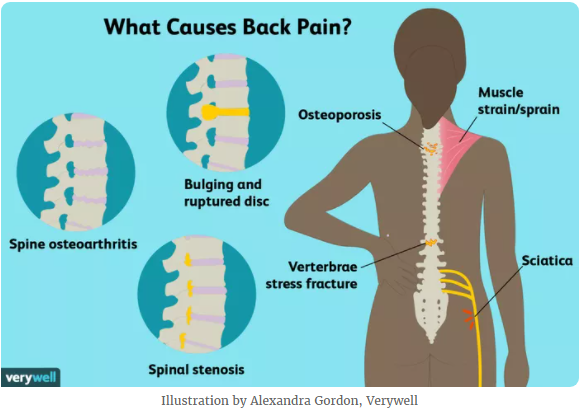
What causes back pain?


HEDIS Measure: Use of Imaging Studies for Low Back Pain Definition-
Members 18-50 years of age with a new primary diagnosis of low back pain in an outpatient or ED visit who did not have an x-ray, CT or MRI within 28 days of the primary diagnosis. A higher score indicates appropriate treatment of low back pain (i.e., the proportion for whom imaging studies did not occur)


Proper Medical Coding:

CPT codes for imaging Studies-

List of Proper DX codes:


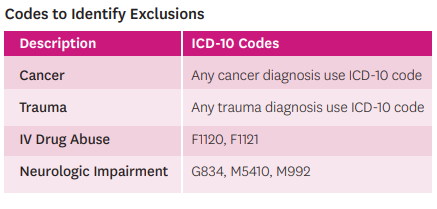
Measure Exclusions:

Exclusions include cancer, recent trauma, IV drug abuse, neurologic impairment, HIV, spinal infection, major organ transplant and prolonged use of corticosteroids.

Proper Exclusions Coding:


Improve the score for this HEDIS Measure:

-Avoid ordering diagnostic studies within 30 days of a diagnosis of new-onset back pain in the absence of red flags (e.g., cancer, recent trauma, neurologic impairment,
or IV drug abuse).
• Provide patient education on comfort measures, e.g., pain relief, stretching exercises, and activity level.
• Use correct exclusion codes if applicable (e.g., cancer).
• Look for other reason for visits for low back pain (e.g., depression, anxiety, narcotic dependency, psychosocial stressors, etc.).
• Document and code/bill all comorbidities (e.g. MVA, fall, trauma, etc.


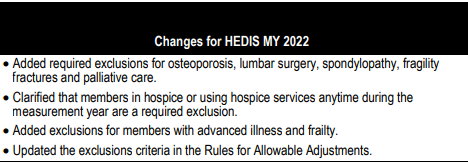
HEDIS Measure: Use of Imaging Studies for Low Back Pain 2022 Changes:


Find this content helpful? Follow my blog for more free medical billing and coding training.

Looking for a specific training? Coming soon the on-demand training/webinars. These webinars include a 10 question quiz and a 60 minute presentation. To read more about these webinars, please visit my on-demand training page. Pre-register today!


Recent Blog Posts: